Radar Absorbing Structures in Composite Ships
The application of a radar absorbing structure (RAS) or radar absorbing material (RAM) layer onto a military composite sandwich ship integrates stealth technology directly into the load-bearing hull. Unlike traditional metal warships that rely heavily on radar-absorbent paint, composite naval vessels embed the stealth layers natively within the composite sandwich cross-section during manufacturing.

Typical Cross-Section of a Stealth Sandwich CompositeThe hull is engineered as a multi-layered panel where each element serves both a structural and electromagnetic purpose:
- Outer Skin (Facing Layer):
Usually made from an electromagnetically transparent material, such as glass fiber reinforced polymer (GFRP) or e-glass plain epoxy. This allows incoming radar waves to pass through rather than immediately reflecting off the surface.
- Radar Absorbing Layer (Lossy Medium):
Positioned immediately beneath the outer skin. This layer contains engineered fillers like carbon nanotubes (CNTs), carbon black, or metal-coated fabrics (e.g., nickel-coated glass). As the radar waves pass through this layer, the electromagnetic energy is converted into trace thermal energy (heat) via electrical resistance and dielectric loss, eliminating the signal.
- Core (The Sandwich" Center):
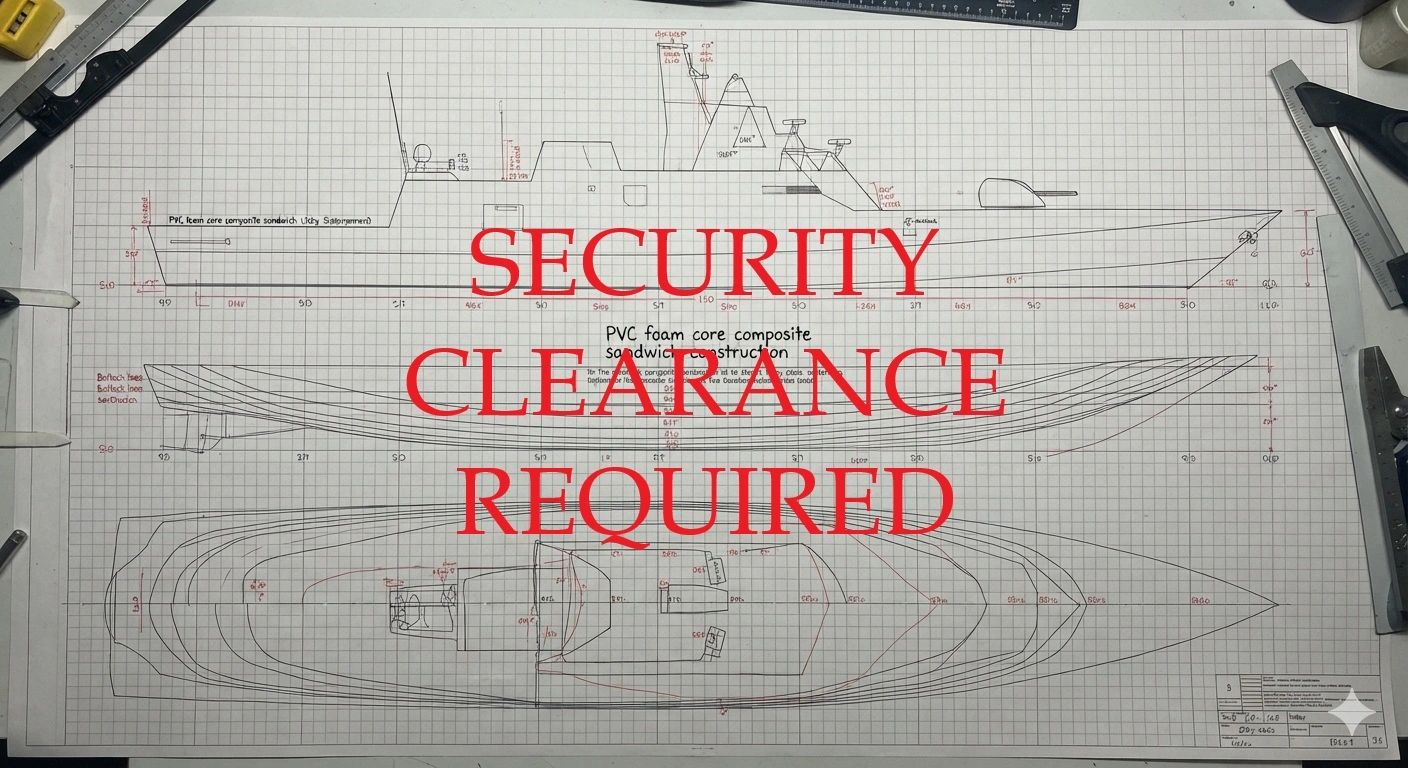
A thick, lightweight core—typically structured as a polymer foam (like PVC or PMI) or a honeycomb matrix. Honeycomb structures are often filled with gradient wave-absorbing materials to further trap and dissipate any escaping frequencies.
- Inner Skin (Reflector Layer):
A highly conductive carbon fiber reinforced polymer (CFRP) layer or a metal backing. Any residual radar energy that makes it completely through the outer skin and core hits this back wall and reflects back into the absorbing core for a secondary round of dissipation, ensuring minimal to zero reflection back to the enemy radar source.
Manufacturing and Application MethodsEmbedding these stealth layers uniformly into curved hulls or complex superstructure shapes requires specialized vacuum manufacturing processes:
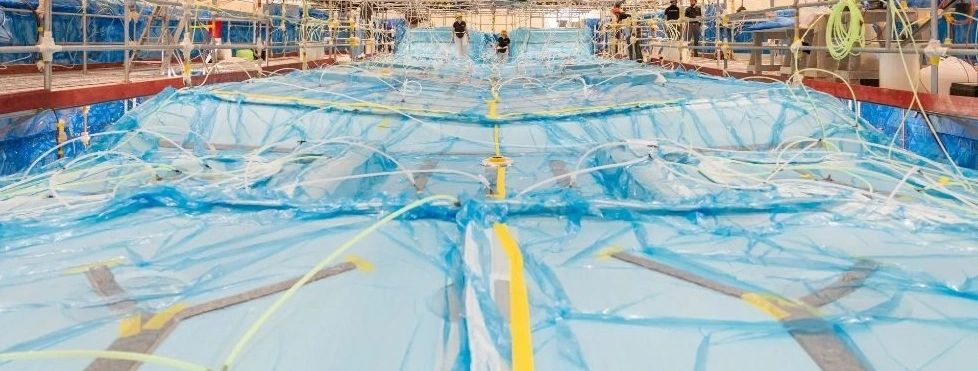
- VARTM (Vacuum Assisted Resin Transfer Molding): The dry fiber layers (glass fibers), the pre-treated lossy RAM fabric layers, the core, and the inner carbon fiber layers are precisely stacked into a large hull mold. The stack is sealed under a vacuum bag, and liquid resin is infused throughout the assembly. Once cured, it creates a unified, high-strength, radar-defeating composite monolith.
- Bicomponent Co-Weaving: Modern advanced applications utilize multi-filament yarns that are pre-coated with radar-absorbing meta-materials. These fibers are directly woven into the structural skins, ensuring the stealth property cannot delaminate, peel, or degrade even under harsh open-ocean impact con